New Patients
Existing Patients
New Patients
Existing Patients
New Patients
Existing Patients
New Patients
Existing Patients


At RGV Smiles by Dr. Rocky L. Salinas, DDS, PA, we combine modern materials and thoughtful treatment planning to restore teeth that are broken, weakened, or cosmetically compromised. Our goal is to deliver ceramic crowns that look natural, function reliably, and respect each patient’s individual smile goals.
Teeth are remarkably strong, but they are not invincible. When a tooth loses significant structure because of decay, injury, a large filling, or repeated grinding, a simple restoration may not be enough to protect it. In those cases, a full-coverage crown restores form and function while preventing further damage.
Advances in dental ceramics mean crowns can now be fabricated without any metal at all. Modern all-ceramic crowns offer durability, excellent biocompatibility, and an esthetic quality that closely mimics natural enamel — making them a preferred option for many restorative and cosmetic cases.
We personalize every treatment plan to balance strength, longevity, and appearance. Our recommendations are based on each tooth’s location, the forces it endures, and the visual harmony of your smile.
A crown is a comprehensive repair that covers the visible portion of a tooth to restore its shape and strength. Unlike a filling, which replaces only a portion of tooth structure, a crown encases and protects the remaining tooth, which can be critical when most of the natural structure has been lost.
Common situations that lead to crown placement include teeth with large fillings that have fractured, teeth that have undergone root canal therapy, and teeth supporting a bridge or implant. Crowns are also used to correct size, shape, or color discrepancies when conservative cosmetic solutions aren’t sufficient.
Choosing a crown is a decision made with long-term function in mind. In addition to strengthening the tooth, a well-designed crown restores proper bite relationships and helps distribute chewing forces more evenly across the dental arch.
To repair and rebuild a tooth with extensive structural damage due to decay or trauma
To replace a large or broken filling
To restore a dental implant
To provide full coverage for the abutment teeth, serving as the supporting ends of a traditional dental bridge
To strengthen and protect a tooth that has undergone root canal therapy
To improve the look of an undersized, slightly misaligned, darkly stained, or misshapen tooth
To address bite discrepancies

All-ceramic crowns are engineered to mimic the optical properties of enamel, including translucency and surface luster. Because they interact with light in a similar way to natural teeth, ceramic restorations can blend seamlessly with adjacent teeth rather than standing out as prosthetic.
Today’s ceramics are available in a range of shades and translucencies, which allows us to match everything from a bright front tooth to a more subdued posterior tooth. Laboratory technicians and digital design tools work together to layer color and texture so the restoration reads as part of your original smile.
Beyond looks, ceramic materials are kinder to the surrounding gum tissue and resist staining over time. For patients with metal sensitivities, metal-free crowns eliminate concerns about reactions or dark margins at the gumline that can sometimes occur with restorations containing metal.
Out of all the available materials for a full-coverage restoration today, metal-free crowns, also known as all-ceramic crowns, offer the most lifelike and biocompatible results. Once commonly referred to as “porcelain jackets,” today’s all-ceramic crowns are fabricated from the most advanced generations of cosmetically appealing, durable, and natural-looking materials. With strength comparable to traditional metal and porcelain fused to metal crowns, all-ceramic crowns provide a highly satisfying and long-lasting option in care.
As the name implies, the term all-ceramic crown means the crown's entire thickness is 100% ceramic. While in the past, porcelain or all-ceramic crowns looked better but did not offer the strength and durability of porcelain fused to metal crowns, it’s no longer the case. Thanks to advances in dental materials, they are stronger and more reliable than ever before.
All-Ceramic crowns interact with light in much the same way as natural teeth and more closely mimic their translucency and luster
All-Ceramic crowns can be made thinner and require less reduction and preparation of the underlying tooth
All-Ceramic crowns are lighter in weight than dental crowns that incorporate a metal substructure
All-Ceramic crowns are also kinder to the surrounding soft tissues.
All-Ceramic crowns are resistant to stain and discoloration
All-Ceramic crowns are metal-free and safer for individuals with allergies or sensitivities to metal
All-Ceramic crowns resemble a natural tooth in its entirety and do not have a metal margin, which is often visible at the gumline
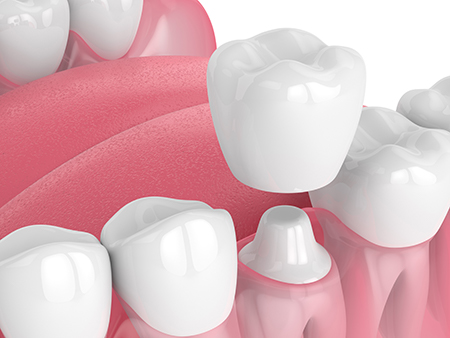
Not all ceramics behave the same under chewing forces. Some materials prioritize translucency and surface detail for front-tooth restorations, while others are formulated for the strength needed in back teeth. The right choice balances your smile’s aesthetic demands with the mechanical demands of chewing.
Lithium disilicate and modern pressed porcelains offer excellent esthetics for visible teeth, while monolithic zirconia and high-translucent zirconia provide superior strength for molars and teeth that endure heavy bite forces. We evaluate each tooth’s role in your bite before recommending a material.
Selecting the right ceramic also considers how much natural tooth remains and whether the restoration will be bonded or cemented in place. These decisions influence longevity and the potential need for future maintenance.
You can rest assured that your new ceramic crown will look naturally beautiful and blend seamlessly with your smile. Our office never compromises on service or materials; your new crown is milled from the latest generation of durable ceramic materials, for the most aesthetically pleasing and natural-looking results.
With the range of dental ceramics available today, which type gets selected to fabricate your new crown depends upon the tooth's location, the stresses on that tooth, and the case's aesthetic requirements. Certain types of all-ceramic crowns are more suited to provide the strength needed for back teeth, while other types better address a front tooth's aesthetic requirements. Although Feldspathic porcelain has been traditionally used in the fabrication of porcelain crowns, today, newer generations of dental ceramics provide options that work for the front teeth as well as the back teeth.
Some of the most popular and effective choices include the following:
Lithium Disilicate Porcelain Crowns
Leucite Reinforced Pressable Porcelain Crowns
Solid or Monolithic Zirconia
High Translucent Zirconia.
With multiple types of all-ceramic crowns to choose from, selecting the right material for an attractive, durable, and long-lasting restorative outcome is a crucial decision.
Our team takes the time to explain the pros and cons of each option so you can weigh aesthetics, strength, and long-term expectations before moving forward.

The crown process typically begins with a focused consultation and exam to determine the tooth’s prognosis. Digital X-rays and intraoral scanning or impressions allow us to assess the remaining structure and plan a restoration that fits both function and esthetics.
To prepare the tooth, a modest amount of enamel and dentin is shaped to create space for the crown. When necessary, we build up weakened teeth with core material to provide a stable foundation. Temporary restorations protect the prepared tooth while the lab or in-house mill produces the final crown.
At the final appointment, the ceramic restoration is tried in, adjusted for bite and comfort, and then bonded or cemented. We check that margins are smooth and that the crown integrates with your bite and adjacent teeth. Aftercare instructions cover gentle cleaning and habits to protect the new restoration.
Our team combines clinical experience with current materials and techniques to deliver predictable outcomes. We prioritize conservative preparation, accurate shade communication, and meticulous finishing so each crown performs well and looks natural.
When complex needs arise, we coordinate care with specialists and labs to ensure restorations meet both functional and aesthetic goals. You’ll find our approach is collaborative: we explain options clearly and involve you in the decision-making process.
We understand the investment you make in restorative care and work to maximize the lifespan of each crown through careful planning, precise execution, and straightforward home-care guidance.
To summarize, ceramic crowns provide a versatile, long-lasting way to restore teeth that are worn, damaged, or in need of cosmetic enhancement. If you would like to learn more about whether a ceramic crown is the right solution for your smile, please contact us for more information.


A ceramic crown is a full-coverage dental restoration made entirely of tooth-colored ceramic material designed to restore the shape, strength, and appearance of a damaged tooth. Unlike crowns with metal substructures, all-ceramic crowns are metal-free and engineered to mimic the translucency and luster of natural enamel. Their optical properties allow them to blend smoothly with surrounding teeth for a lifelike result.
Ceramic crowns come in a range of formulations that balance esthetics and strength, so clinicians can select materials appropriate for front or back teeth. They are commonly used when visual integration with the smile is a priority or when patients have sensitivities to metal. Advances in dental ceramics have narrowed historical gaps in strength compared with metal-based restorations, expanding their clinical uses.
A ceramic crown is usually recommended when a tooth has lost substantial structure from decay, fracture, or a very large existing filling and a more conservative restoration would not provide adequate protection. Crowns fully encase the remaining tooth and restore function, which is especially important after root canal therapy or when a tooth serves as an abutment for a bridge or implant. Veneers and direct fillings are better for smaller cosmetic or structural repairs and do not provide the same full-coverage protection.
The decision to place a crown also considers bite forces and the tooth’s position in the arch, since back teeth endure higher chewing stresses than front teeth. Your dentist will evaluate how much natural tooth remains, occlusal relationships, and esthetic goals when recommending a crown. This evaluation helps ensure the chosen restoration balances longevity, function, and appearance.
Common ceramic materials include lithium disilicate, leucite-reinforced porcelains, monolithic zirconia, and high-translucent zirconia, each offering distinct combinations of translucency and strength. Lithium disilicate and pressable porcelains are often favored for front teeth because of their excellent esthetic properties, while monolithic and high-translucent zirconia are selected for posterior teeth that require superior fracture resistance. Laboratory and digital design processes further tailor color and surface texture for a natural appearance.
Choosing the appropriate ceramic depends on the tooth’s role in your bite, the amount of remaining tooth structure, and your esthetic priorities. Your dentist will discuss the pros and cons of each option, explaining how translucency, thickness, and bonding method affect appearance and durability. This collaborative selection process helps align material performance with your long-term expectations.
The process begins with a focused consultation, examination, and digital imaging or impressions to assess the tooth and plan the restoration. The tooth is prepared by removing a conservative amount of enamel and dentin to create space for the crown, and build-up material may be placed when needed to support the final restoration. A temporary crown protects the prepared tooth while the final crown is fabricated by a lab or milled in-house.
At the final visit the ceramic crown is tried in, adjusted for fit and bite, and then bonded or cemented using techniques appropriate to the material and clinical situation. Occlusion and margin integrity are carefully checked to ensure the crown integrates with adjacent teeth and the opposing bite. At RGV Smiles by Dr. Rocky L. Salinas, DDS, PA we use current scanning and communication methods with our lab partners to achieve accurate fit and consistent shade matching.
Maintaining a ceramic crown requires the same daily care recommended for natural teeth: brush twice a day with a fluoride toothpaste and floss daily to remove plaque from around the crown margins. Regular dental checkups and professional cleanings let your dentist monitor the crown’s fit, margin health, and the condition of adjacent teeth. Avoiding hard or non-food objects and using caution with very hard foods reduces the risk of chipping or fracture.
If you have a habit of grinding or clenching, your dentist may recommend a custom nightguard to protect the crown and surrounding teeth from excessive forces. Good oral hygiene and routine maintenance greatly reduce the risk of recurrent decay at crown margins and help preserve the restoration’s longevity. Promptly report any sensitivity, looseness, or unusual wear so issues can be assessed early.
The lifespan of a ceramic crown varies based on material choice, oral hygiene, bite forces, and how well the crown is fitted and maintained. Crowns placed with meticulous preparation, accurate occlusal adjustments, and excellent home care tend to last many years, while untreated parafunctional habits, poor hygiene, or recurrent decay can shorten their service. Regular examinations allow your dental team to identify early signs of wear, marginal breakdown, or gum issues that could affect longevity.
Material selection also influences durability; some ceramics offer higher fracture resistance for posterior teeth, while others provide superior esthetics for anterior restorations. The bond or cementation method, as well as the quality of the tooth foundation, play important roles in long-term success. Working with your dentist to manage bite forces and maintain oral health will support the crown’s performance over time.
Yes. All-ceramic crowns are metal-free and are an excellent choice for patients with known metal allergies or sensitivities, eliminating concerns about galvanic reactions or dark margins at the gumline that can occur with metal-containing restorations. Ceramic materials are generally biocompatible and tend to be kinder to soft tissues, supporting healthier gum response around the restoration. If allergies or sensitivities are a concern, your dentist will review your medical history and material options to choose the safest approach.
When selecting a ceramic for a sensitive patient, clinicians also consider marginal fit and surface finish, since smooth, well-adapted restorations reduce plaque accumulation and irritation. Digital shade matching and laboratory communication help ensure both esthetic and biologic compatibility. If needed, alternative materials or bonding protocols can further reduce the risk of adverse reactions.
Ceramic crowns are commonly used on implant abutments and as crowns for abutment teeth that support a bridge, but planning differs from single-tooth restorations. For implant restorations, the crown can be screw-retained or cemented to an abutment, and material choice must account for access holes, retrievability, and occlusal forces. When used on bridge abutments, crowns on the supporting teeth must provide reliable retention and contour while preserving healthy margins to protect the underlying tooth structure.
Material selection for implant and bridge restorations balances strength and esthetics based on the location and expected function of the prosthesis. Proper imprinting, digital design, and lab collaboration are essential to achieve precise fit, proper emergence profile, and harmonious occlusion. Your dentist will review these technical considerations when recommending a crown for an implant or bridge.
Common complications include sensitivity after placement, marginal staining or decay if oral hygiene is poor, and occasional chipping or fracture of the ceramic under excessive force. Sensitivity is often temporary and resolves as the tooth adapts, while recurrent decay or marginal issues usually require restorative attention to correct the margin or replace the crown. Small ceramic chips can sometimes be repaired; larger fractures typically require crown replacement to restore full function and esthetics.
Another consideration is wear to opposing teeth, particularly with very hard ceramics such as some forms of zirconia; careful selection of material and polishing protocols help minimize this risk. Regular follow-up appointments allow your clinician to monitor the restoration and perform adjustments before minor concerns become major problems. Timely management of issues and preventive care are key to reducing complications.
Selecting a dental team for ceramic crown treatment means finding clinicians who combine clinical experience with up-to-date materials and communication with skilled dental laboratories. A reliable practice will explain material options, share how digital imaging and shade-matching are used, and describe the steps taken to protect the underlying tooth while achieving esthetic results. Clear explanations about preparation, temporary protection, and final bonding give patients confidence in the planned approach.
Look for a practice that emphasizes conservative preparation, thorough treatment planning, and close lab collaboration to ensure accurate fit and natural appearance. At RGV Smiles by Dr. Rocky L. Salinas, DDS, PA we prioritize these elements to help patients understand options and expectations before moving forward. A transparent, evidence-based approach with regular follow-up care helps ensure predictable, long-lasting outcomes.

Ready to take the next step toward a healthier, brighter smile?
Contacting RGV Smiles by Dr. Rocky L. Salinas, DDS, PA is the first step! Our supportive team is available to assist with all your needs, from booking routine care to discussing advanced cosmetic services. Simply call or use our online form to connect with us today. We make it easy to prioritize your oral health!

Back to top